Beginner Guide / How to Play
How to Play MECCHA CHAMELEON
MECCHA CHAMELEON can look chaotic the first time you join a lobby. People run around as plain white characters, paint themselves against walls, freeze into strange poses, and then hunters rush in trying to spot anything that looks wrong.
This guide is for complete beginners. If you just bought the game on Steam, start here. It explains how a match works, what to do as a hider, what to do as a hunter, which mechanics matter most, and where to go next.
Remember this first
Your first goal is not a perfect disguise. It is understanding the rhythm of the round.
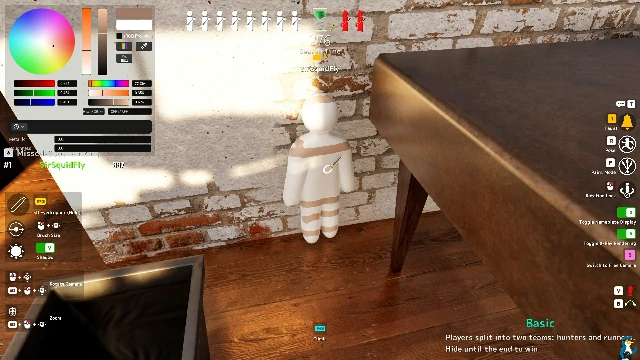
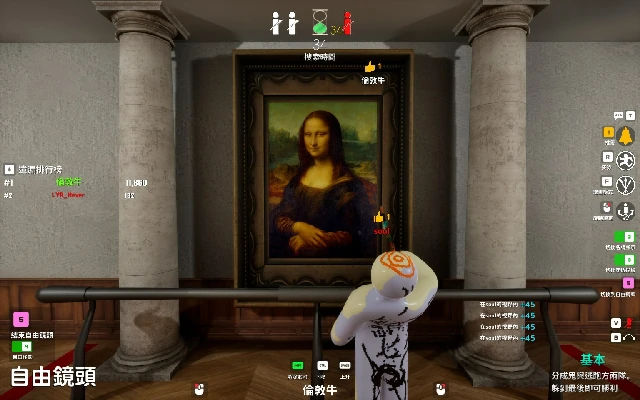
The loop
Hide. Paint. Survive. Learn.
7
round steps
5
hider steps
5
hunter steps
00 / The short version
How a Round Works
Seven steps. Every match follows this rhythm. Once you know it, everything else makes sense.
- 01
Players join a lobby
Public or private, choose your entry point.
- 02
Host chooses map, mode, settings
Basic mode is easiest for beginners.
- 03
Hiders get preparation time
This is your window to find a spot and paint.
- 04
Hiders find a spot, pose, and paint
Spot first. Pose second. Paint third.
- 05
Hunters are released
Stay still. A nearby hunter does not mean you are caught.
- 06
Hunters search the map
They look for wrong colors, human outlines, and movement.
- 07
Reveal / Answer check
Everyone sees where hiders were. This is your best learning tool.
As a hider
Cover your white body, use a simple pose, and stay calm.
As a hunter
Search by area, look for visual mistakes, learn from reveals.
As a host
Start simple. Basic mode, small group, enough prep time.
01 / Getting in
How to Start Your First Match
You can play in a public lobby, with friends, or in a private room for practice. Each entry point has a different learning curve.
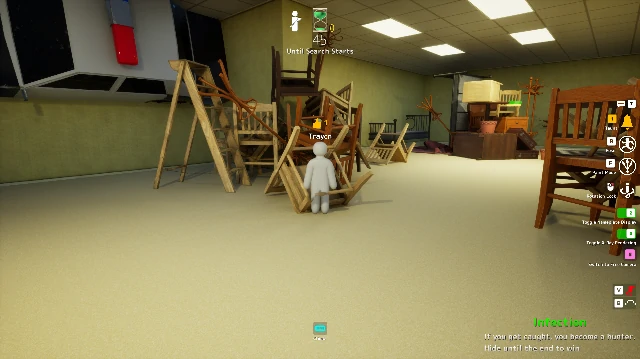
Practice alone
Private Room Solo
Create a private room and explore the map without pressure. Walk around, test hiding spots, try poses against walls, practice painting quickly, and learn where hunters look.
Best for
Learning surfaces, colors, and spots before facing real players.
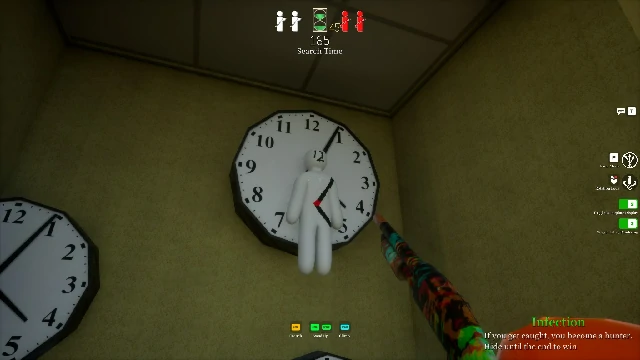
With friends
Private Friend Lobby
One player creates a server with a name and password. Friends find it via Find Private Server and enter the same credentials. Host sets map, mode, and round settings.
Quick flow
- Create Server → set name + password
- Friends → Find Private Server
- Enter same name + password
- Host picks map and settings
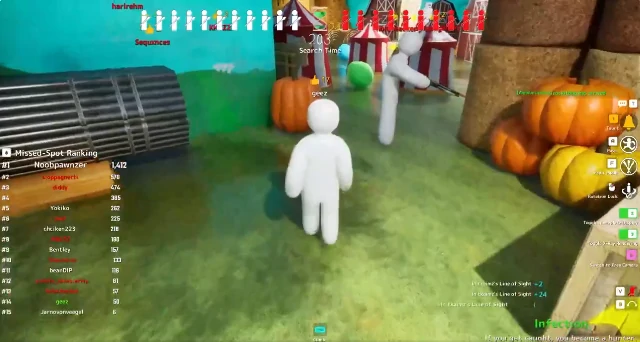
Public lobby
Jump Into Public
Faster to join, but harder for beginners. Players may already know maps, spots, and tricks. Expect to lose quickly at first — use the reveal to learn.
Check before joining
- — Player count and region
- — Whether it looks beginner-friendly
- — Whether you are ready to learn from losses
02 / Match structure
How a Match Works
Lobby & Settings
Before the Round
Host picks map, game mode, prep time, search time, and taunt settings. For your first games, Basic mode is easiest: hiders hide, hunters search.
Game Modes →Hiding Phase
Paint Yourself In
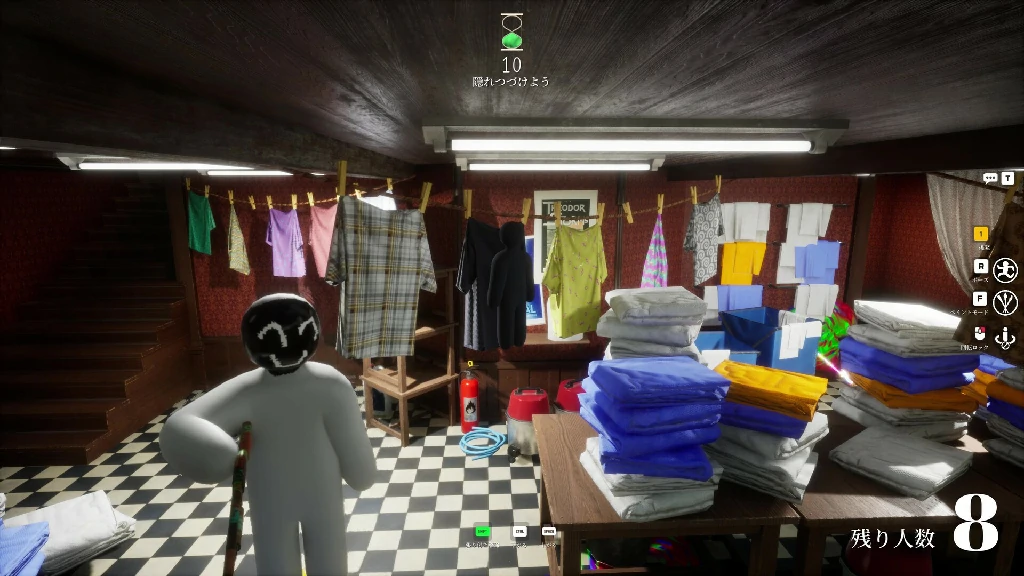
Hiders enter the map before hunters. Find a spot, choose a pose, paint your body. This phase is short — find a usable spot first, then paint. Do not wander.
Painting Guide →Hunting Phase
Hunters Released
Hunters search for wrong colors, human outlines, strange shadows, body parts sticking out, and movement. As a hider: stay calm. A nearby hunter is not a confirmed catch.
Hunter Routes →Reveal / Eeyan
Learn Every Round
The reveal shows where every hider was. Watch which spots worked, which paint jobs failed, which hunters missed the obvious. This is not just funny — it is your best teacher.
Reveal Guide →03 / Hider guide
Beginner Hider: Five Steps
Your job is to survive until hunters run out of time. You do that by choosing a spot, breaking up your body shape, painting yourself into the environment, and avoiding unnecessary movement.
Pick a simple spot
Find Somewhere Easy to Paint
Do not start with the hardest hiding spot on the map. Your first goal is to find somewhere easy to paint. Good beginner spots include plain walls, dark corners, areas with shadows, trash piles or clutter, furniture edges, and decorations.
Good for beginners
- Plain walls
- Dark corners
- Shadow areas
- Trash / clutter
- Furniture edges
Save for later
- Complex patterns
- Exact artwork match
- High angled spots
- Open-area bluffs
- Clone tricks
Pose before you paint
Shape First, Color Second
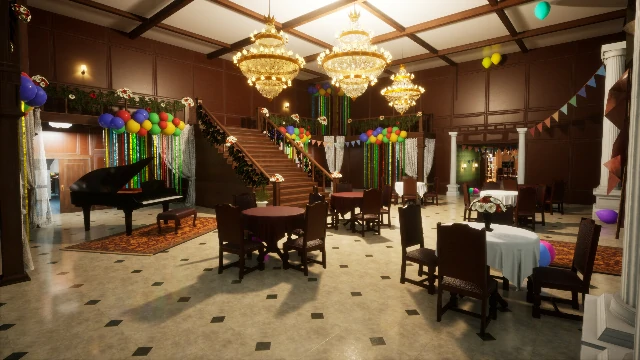
Poses change your silhouette. A standing human shape is easy to recognize even if the color is close. Find the spot, choose a pose that fits, push close to the surface, then paint after your body shape is set.
Find the spot
Choose a pose that fits that spot
Push close to the wall or surface
Paint after your body shape is set
Cover the white first
Big Shapes Before Details
Your character starts as a plain white body. That white is easy to see. New players often paint tiny details first — do not do that. Cover the large white areas first.
First: Cover body with main nearby color
Second: Make sure arms, legs, head, torso are not white
Third: Adjust darker areas for shadows
Only if time: Add texture or detail
A fast, imperfect paint job is usually better than one perfect arm and three white limbs.
Eyedropper tip
Sample shadow and lit areas separately.
Use the eyedropper
Sample, Don't Guess
The eyedropper samples colors from the environment. It is usually more accurate than guessing manually. Use it on the wall behind you, the floor under you, a nearby object, a shadow patch, or a painting.
Sample from
- The exact surface you touch
- Shadow patches
- Lit areas separately
- Nearby objects
Then adjust
- Check from hunter angle
- Darken if too bright
- Match shadow depth
- Re-sample if you move
Do not panic
Stay Still When Hunters Get Close
Movement gives you away. If a hunter walks near you but has not noticed you, do not immediately run. Stay still unless the hunter is attacking your exact spot, you are clearly exposed, or another player distracts them.
Stay still if
- Hunter walks past
- Hunter looks nearby
- You are not exposed
Move only if
- Hunter attacks your spot
- You are clearly exposed
- A distraction opens a gap
Your first hider goal
Find a spot quickly. Use any pose that makes you less human-shaped. Cover most of your body. Stay still. Watch the reveal and learn.
Do not worry if you get caught. Every reveal teaches you what hunters actually notice.
04 / Hunter guide
Beginner Hunter: Five Steps
Beginners often think hunting is easy. Good hiders can blend into walls, paintings, clutter, and shadows surprisingly well. Your job is to find all hiders before time runs out — and that requires a method, not just speed.
Hunter mindset
Scan properly. Sprint less. Learn from every reveal.
Search by area
Zone by Zone
Pick one area, scan it properly, then move on. Check corners and obvious spots, scan walls and paintings, look above eye level, inspect clutter. If you sprint through rooms, you will miss hiders standing right in front of you.
Search Routes →Look for mistakes
Visual Clues
Most beginner hiders make small mistakes. Look for a color that is slightly wrong, a body part sticking out, a human-shaped outline, a shadow that does not belong, a patch of wall that looks too smooth, or a shiny area on a matte surface.
Spot Bad Camo →Don't only check corners
Look Up. Look Weird.
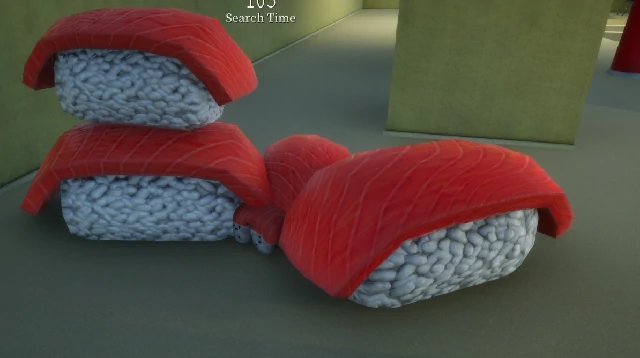
Corners are obvious. Remember to check high spots, ceiling edges, wall decorations, paintings and posters, furniture sides, trash piles, balloons, and open areas that look too normal. Players often fail to look up — high spots are valuable for hiders.
High Spots Guide →Use forced taunt
Sound as a Clue
If forced taunts are enabled, hiders produce a sound at intervals. When you hear one: identify the general direction, move toward that zone, then search carefully instead of blindly rushing. Forced taunt helps, but it does not replace observation.
Taunt Strategy →Learn from the reveal
Review Every Round
At the end of the round, ask: Did I miss a high spot? Did I ignore a wall or painting? Was the color actually close? Did the hider use a strong pose? Did I move through the room too quickly? This is how hunters improve.
Reveal Learning →05 / Mechanics
Essential Mechanics for New Players
You do not need to master every mechanic before your first match. Know what these tools are — master them one at a time.
Brush / Painting
Paint Your Body
How hiders recolor their character model to match nearby surfaces. Beginner rule: big coverage first, details later.
Painting Guide →Eyedropper
Sample the World
Samples colors from the environment. Usually more accurate than guessing. Use it whenever you are matching a wall, object, floor, shadow, or decoration.
Color Matching →Poses
Break Your Shape
Change your body shape to make you less human-looking. Good poses make you easier to blend into the environment.
Pose Guide →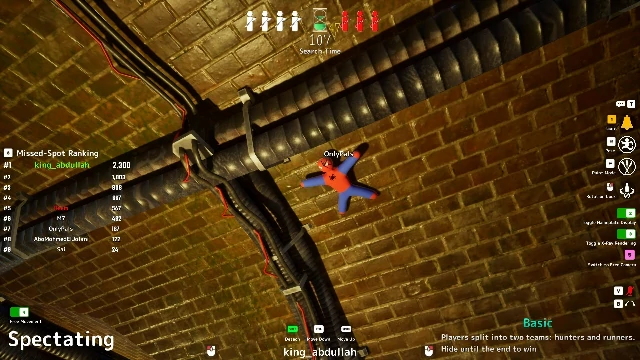
Free Camera
Watch Without Moving
Lets hiders observe the map after hiding. Watch hunters and understand what is happening — but do not get so distracted that you miss danger near your own spot.
Free Camera Guide →Forced Taunt
Sound Tells
A room setting that makes hiders reveal their general location through sound at intervals. Helps hunters in larger lobbies. As a hider, you cannot prevent it — so pick a spot that is still hard to pinpoint.
Taunt Settings →Clones
Advanced: Extra Copies
Let hiders create extra versions of themselves. Adds risk because a found clone can affect you. For beginners: treat clones as an advanced mechanic. Learn basic hiding first.
Clones Guide →Eeyan / Answer Check
React to the Reveal
A social reaction players give after seeing hiding spots during the answer check phase. It rewards clever, funny, or impressive hiding. For beginners, the important part is the reveal itself — watch where people hid and learn from it.
What Is Eeyan? →Controls & Keybinds
Know Your Keys
Default keys cover movement, painting, poses, and camera tools. Keybinds can change with updates or rebinding — always treat the in-game HUD and settings menu as the final source.
Controls Guide →06 / First match
Recommended First-Match Setup
If you are the host, your first game should be simple. The goal is to learn the rhythm, not to run the most complex lobby possible.
✓ Use these
- —Private lobby if possible
- —Small group
- —Basic mode
- —Easy-to-read map
- —Enough prep time to learn painting
- —Search time that is not too short
✗ Avoid these
- —Huge lobbies
- —Complex Workshop maps
- —Harsh forced taunt settings
- —Modes your group doesn't know
- —Short timers with no time to paint
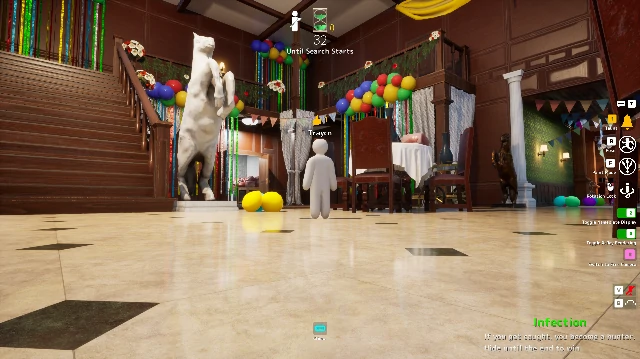
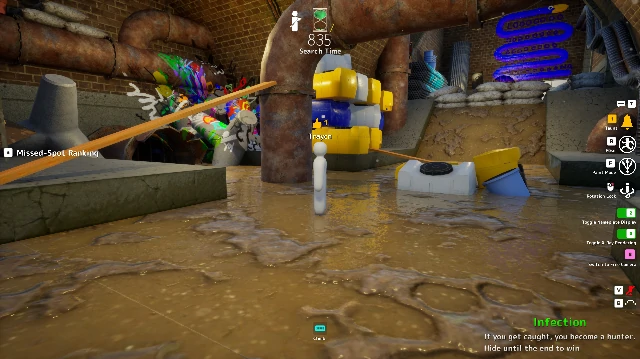
Solo practice targets
07 / Mistakes
Common Beginner Mistakes
Hider mistakes
Why You Got Caught
- !
Painting tiny details before covering the body
Cover the big white areas first. Always.
- !
Leaving white limbs visible
One bright white arm undoes everything else.
- !
Using a pose that still looks human
Standing upright is the easiest shape to recognize.
- !
Matching the front color but ignoring side angles
Hunters approach from all directions.
- !
Forgetting that shadows need darker colors
A shadow-area hider painted in bright wall color stands out immediately.
- !
Moving too early when hunters are nearby
Stay still. A close hunter is not a confirmed catch.
Hunter mistakes
Why You Missed Them
- !
Running without a search route
Sprinting through rooms means missing hiders in plain sight.
- !
Only checking floor-level corners
Corners are obvious. Better hiders use less obvious places.
- !
Forgetting to look up
High spots and ceiling edges are consistently underused by hunters.
- !
Ignoring walls, paintings, balloons, and trash
These are the most common hiding surfaces. Check them every room.
- !
Noticing a strange color but not inspecting it
Your instinct is usually right. If something looks off, check it.
- !
Skipping the end-of-round reveal
The reveal is your best learning tool. Never skip it.
08 / After your first match
Guides to Read After This
Once you understand the basics, pick a direction based on what you want to improve. Each path builds on what you just learned.
If you want to hide better
Hider Skill Path
- →Eyedropper Color Matching Guide
- →Pose Guide: Break Your Silhouette
- →Shadow Control for Hiders
- →Clones Guide
- →Best Hiding Spots for Beginners
If you want to hunt better
Hunter Skill Path
- →Hunter Search Routes for Beginners
- →How to Spot Bad Camouflage
- →Forced Taunt Strategy
- →Map Checklists for Hunters
- →No One Looks Up: High Spots
If you want better friend lobbies
Social Play Path
- →Best Friend Lobby Settings
- →Game Modes Explained
- →Best Workshop Maps for Groups
- →Full Multiplayer Guide