Game overview / designed article

What Is MECCHA Chameleon?

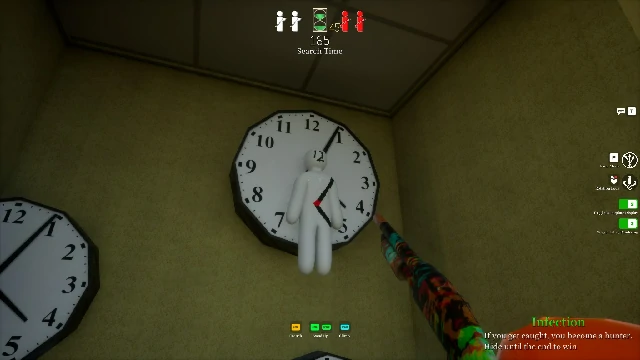
MECCHA CHAMELEON is a multiplayer hide-and-seek party game on Steam. Instead of becoming a prop, hiders paint their own bodies to blend into the map. Hunters race to spot the disguised players before time runs out. The result is a mix of camouflage, comedy, and social mind games that has made it one of the most viral indie games on the platform.

Created by a two-person Japanese indie team in about two months and launched with no traditional marketing spend, the game crossed more than 10 million copies sold shortly after release. That success is easier to understand once you see a round: one hider might become nearly invisible, another might paint themselves the wrong color, and someone else might walk around pretending to be a hunter.

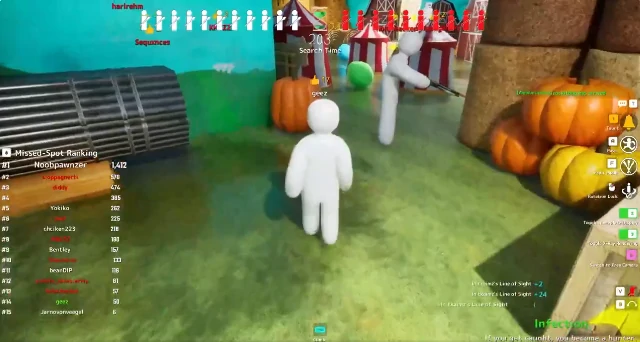
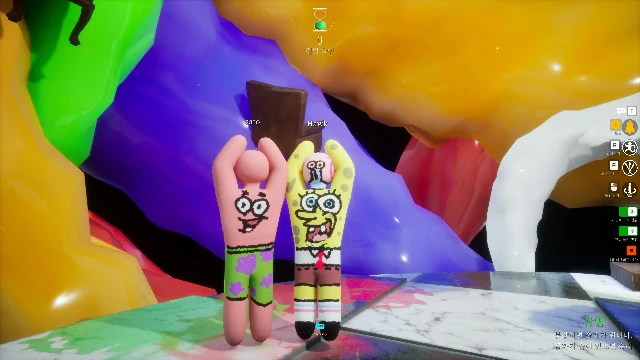
Colorful gameplay-style scene with a hider blending into a busy map
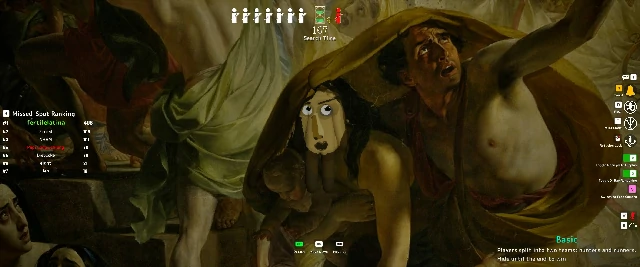
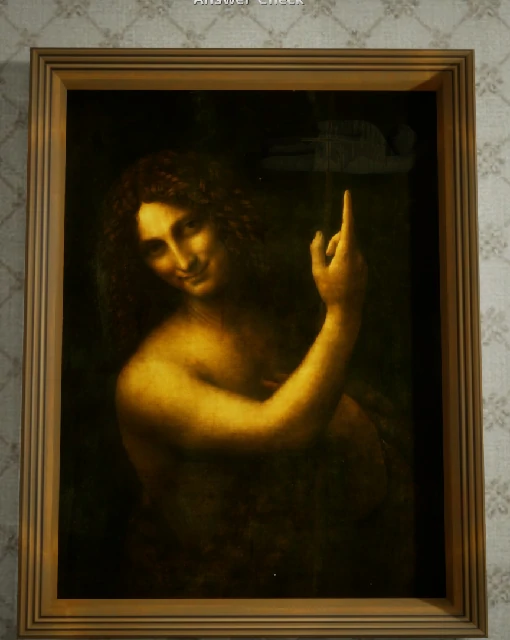
Art gallery wall texture for camouflage

The hook

You are not choosing a prop. You are painting yourself.

2

person team

10M+

Steam sales

What you control

format_paint

Color: copy the wall, shadow, painting, trash, cake, or whatever surface might hide you.

accessibility_new

Pose: break up your human shape so hunters stop reading you as a player.

psychology

Nerve: sometimes confidence sells a terrible disguise.

At its simplest

MECCHA CHAMELEON is a multiplayer party game about hiding from hunters. The twist is that hiders paint their own bodies instead of turning into ready-made props.

That is where the fun starts.

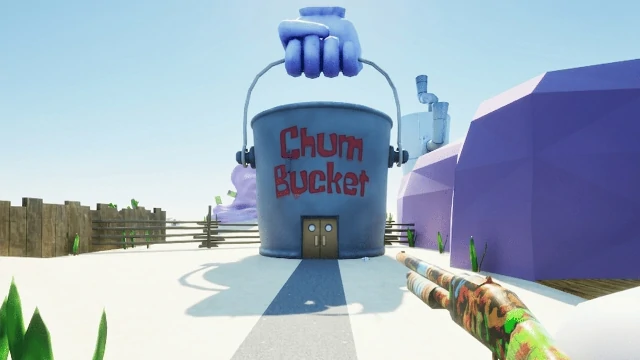
Colorful urban map texture with paint and clutter
A blank body, a brush, a timer, and visual noise.

01 / The mechanic

The Painting Hide-and-Seek Mechanic

Most hide-and-seek games give you a hiding spot. Prop Hunt-style games usually give you a disguise. MECCHA CHAMELEON gives you a blank body, a brush, a timer, and a room full of visual noise.

As a hider, you have to choose where to stand, how to pose, what colors to copy, and which angle will fool a hunter. A flat wall might work. A painting might work. A stack of garbage might work. A corner full of balloons might work. The game is not asking whether you can press a disguise button at the right time. It is asking whether you can make your body look like it belongs in the scene.

Not this

Press a button and become a prop.

This

Paint, pose, angle, and hope hunters believe the lie.

That small change makes the whole game feel different. Your camouflage is not something the game gives you. It is something you make under pressure.

Sometimes it works beautifully. Sometimes it fails in the funniest possible way.
Colorful failed painting texture
Art gallery wall for advanced camouflage

Common disasters

  • Wrong wall color.
  • Half-painted body.
  • Pose still looks human.
  • One bright limb sticking out.

02 / Comedy and skill

Why Bad Camouflage Is Part of the Fun

One of the best things about MECCHA CHAMELEON is that being bad at it can be just as entertaining as being good.

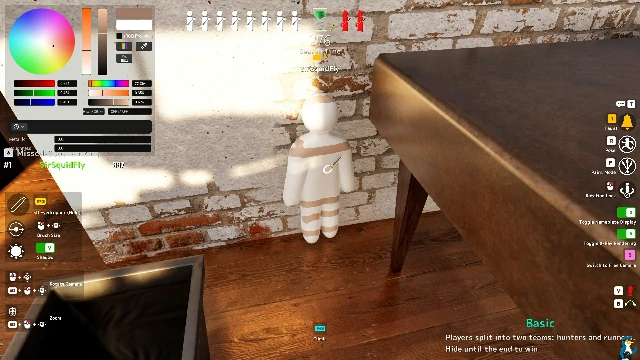
A hider might try to paint themselves like a wall and end up looking like a stain. Someone might only finish half their body before the hunters are released. A player might copy the wrong color, choose a terrible pose, or leave one bright white limb sticking out from behind a chair. In a more serious game, that would just be failure. In MECCHA CHAMELEON, it becomes the highlight of the round.

This is especially true with friends. A terrible disguise gives everyone something to laugh at. A bad paint job that somehow survives until the end is even better. The reveal after a round can be funnier than the chase itself, because everyone gets to see which hiding spots were genius, which were lucky, and which were absolute disasters.

MECCHA CHAMELEON works because it does not only reward perfect play. It also turns mistakes into comedy.

03 / High skill

How Great Players Turn Hiding Into Art

The other side of the game is just as important: when someone is good at painting, the results can be genuinely impressive.

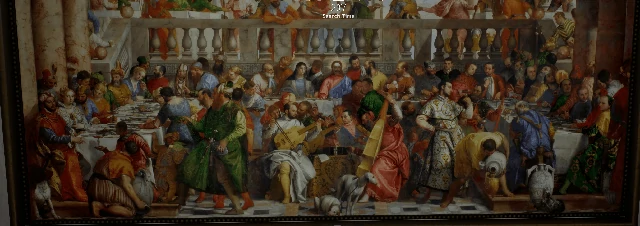
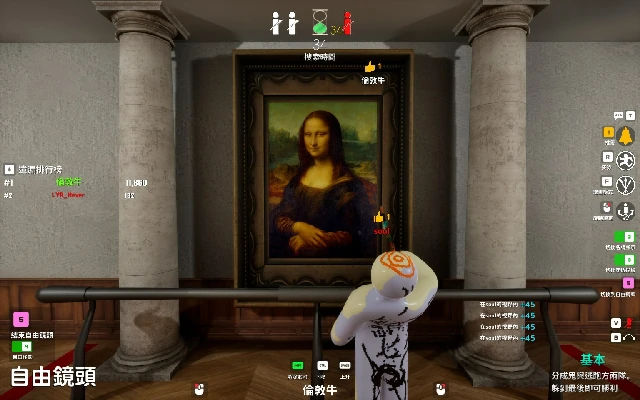
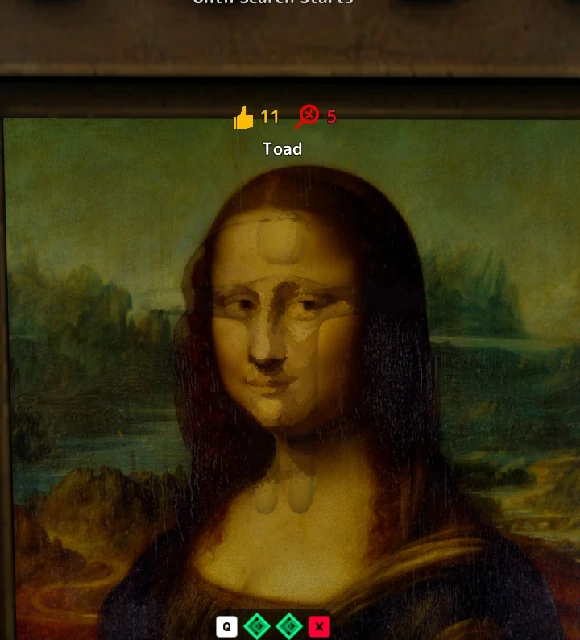
Players were recreating the Mona Lisa inside MECCHA CHAMELEON as the game passed 7 million copies sold. That story matters because it shows what the painting system can become in the hands of creative players. People are not only hiding behind objects. They are standing in front of artwork, matching colors, mimicking shapes, and turning their own bodies into part of the image.

Museum gallery wall for creative camouflage

That contrast is one of the game’s strongest hooks. A beginner may look like a walking accident. A skilled player can look like they were printed onto the wall.

The same tool creates both outcomes. That is the magic of it.

People walking through a bright space, suggesting hiding in plain sight
Bright corridor for a fake hunter mind game

Fake hunter logic

If everyone is looking for scenery, act like you are not hiding.

04 / Mind games

Hiding, Bluffing, and Social Mind Games

MECCHA CHAMELEON is not only about painting well. It is also about understanding what other players expect to see.

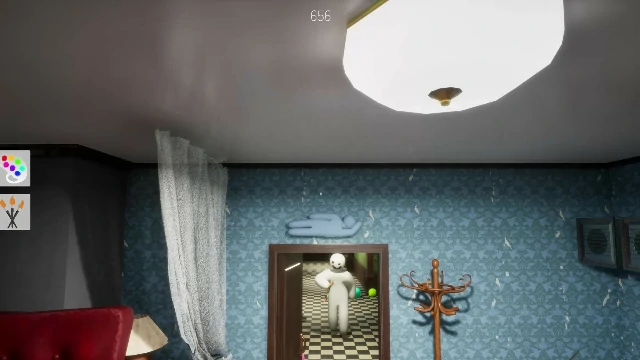
One of the funniest examples was a player who did not really hide at all. Instead of blending into a wall or object, they painted themselves white and walked around as if they were one of the hunters. Other players were so focused on searching for hidden shapes that they ignored the obvious impostor moving in front of them.

That is the kind of trick MECCHA CHAMELEON makes possible. You can hide in a corner, but you can also hide in plain sight. You can try to look like scenery, but you can also try to look like you are not part of the problem at all.

The game is full of these small mind games. A good disguise can fool the eyes. A good bluff can fool the brain.

05 / Freedom

Many Ways to Hide, Move, and Survive

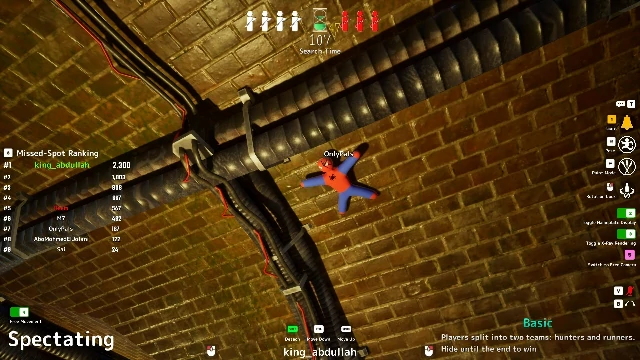
The best hiding spot is not always the darkest corner. Sometimes it is a wall everyone walks past. Sometimes it is a ceiling edge no one checks. Sometimes it is a painting, a pile of trash, a balloon cluster, a cake, a hotel decoration, or a patch of shadow.

The game gives players room to improvise. You can hide. You can move. You can run if a hunter gets too close. You can change spots. You can use poses to break up your silhouette. You can use the environment’s colors and shadows. With later mechanics such as clones, players can even create extra versions of themselves, adding another layer of risk and deception.

Hide

Use corners, shadows, paintings, trash, or clutter.

Move

Run, change spots, or escape when a hunter gets close.

Bluff

Act normal enough that nobody questions you.

That freedom is important. MECCHA CHAMELEON is funny because players keep inventing bad ideas, brilliant ideas, and ideas so stupid that they somehow work.

06 / Friends

Why It Is Better With Friends

Saying MECCHA CHAMELEON supports multiplayer is technically true, but it misses the point. The game is not just playable with friends. Friends make the game funnier.

With friends, every failed disguise becomes a roast. Every successful hiding spot becomes a story. Every hunter who walks past someone without noticing becomes part of the joke. When the round ends and everyone sees where the hiders actually were, the reveal can turn into a full group argument: Was that spot genius? Was it luck? How did nobody see that? Why did you paint yourself like that?

Private servers, passwords, public lobbies, adjustable round settings, game modes, and forced taunts all matter because they let groups shape the chaos. But the real value is social. MECCHA CHAMELEON gives friends a machine for making clips, arguments, betrayals, compliments, and running jokes.

The game is at its best when the lobby is reacting together: laughing at the worst paint job, applauding the best camouflage, or losing their minds because someone survived in a place that should never have worked.

Friends laughing together
Players running through gallery-like space

The concept is instantly readable: hide by painting yourself into the world. The results are unpredictable.

07 / Viral logic

Why It Went Viral

MECCHA CHAMELEON’s success is not hard to understand once you see a round play out.

The concept is instantly readable: hide by painting yourself into the world. The results are unpredictable: one player creates a near-perfect disguise, another makes a visual crime scene, and someone else wins by pretending to be a hunter. Every round can produce a moment that makes sense in a ten-second clip.

That is why the development story feels so striking. MECCHA CHAMELEON was created by a two-person Japanese indie team in about two months, used no traditional marketing spend, and still crossed more than 10 million copies sold on Steam. The game did not need a complicated pitch. The fun explains itself as soon as you see someone vanish into a painting, fail to match a wall, or walk through a lobby pretending they are supposed to be there.

It is a viral game because its jokes are visual, immediate, and easy to share.

08 / Maps and Workshop

Maps, Workshop, and Steam Support

MECCHA CHAMELEON depends on environments. Every map is a new set of colors, textures, shadows, props, and visual traps.

Art gallery and map-like environment
New map, new surfaces to copy.

Official maps

Offices, mansions, countryside props, city streets, hotels, sewers, candy worlds, and other cluttered spaces.

Workshop maps

Galleries, restaurants, markets, meeting rooms, pools, and other player-made scenes create new hiding ideas.

More maps mean more surfaces to copy, more objects to imitate, more places to make terrible decisions, and more chances for artists to do something impressive. A map like an art gallery naturally invites players to try painting themselves into the artwork. A messy restaurant or market gives less precise players plenty of clutter to abuse. The more visual material the game has, the more ways players can mess with each other.

09 / Comparison

MECCHA CHAMELEON vs Prop Hunt

Prop Hunt asks

What object did you become?

MECCHA asks

Can you make everyone believe you belong here?

MECCHA CHAMELEON is easy to compare to Prop Hunt, but the difference is important.

In Prop Hunt, the joke is usually that a player becomes the wrong object in the wrong place, or picks the perfect prop and somehow gets away with it. In MECCHA CHAMELEON, the player is still a body. The disguise comes from paint, pose, placement, lighting, and nerve.

That creates a different kind of comedy. A bad disguise is not just a bad choice; it is a bad piece of art. A great disguise is not just a good hiding spot; it is a little visual trick. And the best plays are not always the most hidden ones. Sometimes the best play is standing in the open and trusting that nobody will question you.

Group of players and party game mood

10 / Fit

Who Is MECCHA CHAMELEON For?

MECCHA CHAMELEON is a strong fit for players who enjoy party games, social deduction, Prop Hunt-style chaos, creative multiplayer, and games that generate funny stories without needing a complicated ruleset.

It is especially good for friend groups, streamers, viewer-participation lobbies, and players who enjoy both clever plays and complete disasters. If you like games where the funniest moment of the night might come from someone doing something stupid under pressure, this is the kind of game that can deliver that repeatedly.

It may not be the right fit if you only want a polished competitive shooter, a serious ranked experience, or a solo story game. PC Gamer’s review praised the multiplayer concept while also noting rough edges, which is worth keeping in mind. MECCHA CHAMELEON is creative, chaotic, and very funny, but it is still a fast-moving indie game rather than a perfectly polished big-budget multiplayer platform.

Steam PC setup and online play mood

11 / Before playing

What to Know Before Playing

MECCHA CHAMELEON is available on PC via Steam, with online multiplayer and Steam Workshop support listed on the Steam store page. If you want to play with friends, the game supports server creation and private-server-style joining through names and passwords.

For platform questions such as mobile, console, browser, or free versions, use official sources and the FAQ. Because the game became popular quickly, there are already unofficial pages, clones, or misleading search results around it. The safest starting point is the official Steam page.

The game is also updating quickly. Maps, mechanics, settings, and balance details may change, so always check the latest in-game information and official channels if you need current details.

Where to Go Next